Choosing the right crushing circuit is one of the most important decisions when designing a mining or aggregate processing plant.
A two-stage crushing plant may be sufficient for some applications, while a three-stage circuit may be necessary when the feed material is large, the final product is fine, or strict particle-size and shape requirements must be met.
The choice should not be based simply on the number of crushers. Raw material characteristics, feed size, required capacity, final product specifications, particle shape, energy consumption, and operating costs all need to be considered.
This guide explains the differences between 2-stage and 3-stage crushing circuits and provides practical guidance for selecting the right configuration for your plant.
What Is a Crushing Circuit?
A crushing circuit is the sequence in which material passes through different crushing and screening stages to achieve the required product size.
A typical crushing process may include:
Feeding → Primary Crushing → Secondary Crushing → Screening → Finished Products
When additional size reduction or shaping is required, a tertiary stage can be added:
Feeding → Primary Crushing → Secondary Crushing → Tertiary Crushing → Screening → Finished Products
The final circuit depends on the relationship between the raw material and the required finished product.
What Is 2-Stage Crushing?
A 2-stage crushing circuit uses two main crushing stages.
A common configuration is:
Primary Crusher → Secondary Crusher → Screening
For hard rock aggregate production, a typical equipment combination may be:
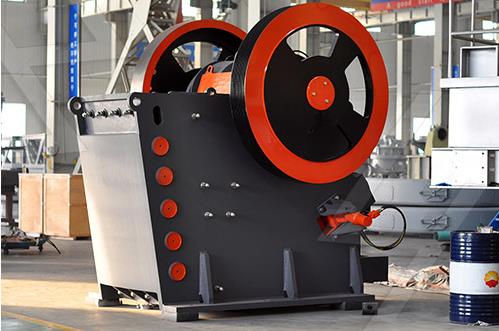
Jaw Crusher → Cone Crusher → Vibrating Screen
The jaw crusher performs the primary size reduction, while the cone crusher further reduces the material before screening.
Oversize material can be returned to the secondary crusher in a closed circuit.
Typical 2-Stage Crushing Flow
Raw Material
↓
Vibrating Feeder
↓
Jaw Crusher
↓
Cone Crusher
↓
Vibrating Screen
↓
Finished Aggregate
With closed-circuit operation:
Screen Oversize → Return to Cone Crusher
A two-stage circuit can provide a relatively simple process with fewer crushing machines and less equipment to maintain.
What Is 3-Stage Crushing?
A 3-stage crushing circuit adds a tertiary crushing stage after primary and secondary crushing.
A typical configuration is:
Primary Crusher → Secondary Crusher → Tertiary Crusher → Screening
For aggregate applications, the equipment may include:
Jaw Crusher → Cone Crusher → Cone Crusher or VSI Crusher → Vibrating Screen
The tertiary stage provides additional size reduction and, depending on the equipment selected, can also improve particle shape or produce manufactured sand.
Typical 3-Stage Crushing Flow
Raw Material
↓
Vibrating Feeder
↓
Primary Jaw Crusher
↓
Secondary Cone Crusher
↓
Tertiary Crusher
↓
Vibrating Screen
↓
Multiple Finished Products
Oversize material can be returned to the appropriate crushing stage.
2-Stage vs. 3-Stage Crushing: Key Differences
| Factor | 2-Stage Crushing | 3-Stage Crushing |
|---|---|---|
| Number of crushing stages | Two | Three |
| Process complexity | Relatively simple | More complex |
| Equipment investment | Generally lower | Generally higher |
| Maintenance points | Fewer | More |
| Fine product production | Application dependent | Better suited to finer products |
| Particle shape control | Depends on crusher and material | More process flexibility |
| High reduction requirements | May be limited | More suitable |
| Multiple final products | Possible | More flexibility |
| Manufactured sand | May require additional equipment | Often easier to integrate |
| Suitable applications | Moderate reduction | Higher reduction or stricter product requirements |
The table provides a general comparison. Actual performance depends on equipment selection, material properties, operating conditions, and plant design.
When Is 2-Stage Crushing a Good Choice?
A two-stage circuit may be appropriate when the feed material does not require an extremely high reduction ratio and the final product specifications can be achieved through primary and secondary crushing.
Typical applications include:
Aggregate production
Limestone crushing
Some granite applications
Road base production
Quarry material processing
Projects with relatively straightforward product requirements
For example, a quarry may receive large rock and need to produce several coarse aggregate sizes without requiring a large amount of manufactured sand.
In such cases, adding a third crushing stage may increase equipment and operating costs without providing enough additional benefit.
When Is 3-Stage Crushing More Appropriate?
A three-stage circuit may be considered when the required size reduction cannot be efficiently achieved through two stages alone.
It can be useful when:
Feed size is relatively large
Final product size is relatively fine
A narrow product-size distribution is required
Several final products are required
Better particle shape is important
Manufactured sand is part of the product mix
The material is hard and difficult to reduce efficiently in fewer stages
For example, a granite aggregate plant may use a jaw crusher for primary crushing, a cone crusher for secondary crushing, and a VSI crusher for tertiary crushing and shaping.
How Feed Size Affects the Crushing Circuit
Feed size is one of the first factors to evaluate.
If the raw material contains very large rocks, the primary crusher must be capable of handling the maximum feed size.
However, the primary crusher does not need to produce the final product size. Its main purpose is to reduce the material sufficiently for the next crushing stage.
The secondary and tertiary stages then progressively reduce the material.
This staged reduction allows each crusher to operate within a suitable range instead of forcing one machine to perform excessive size reduction.
How Final Product Size Affects the Choice
The required final product size is another major consideration.
If the customer requires relatively coarse aggregate, a two-stage circuit may be sufficient.
If the plant must produce fine aggregate or manufactured sand, additional crushing and shaping may be required.
For example:
Large Rock → Primary Crushing → Secondary Crushing → Coarse Aggregate
may require fewer stages than:
Large Rock → Primary Crushing → Secondary Crushing → Tertiary Crushing → Screening → Fine Aggregate and Manufactured Sand
The smaller the target product size, the more carefully the crushing ratio and screening process need to be designed.
The Role of Screening in 2-Stage and 3-Stage Circuits
Screening is essential in both types of crushing circuits.
A vibrating screen separates material according to particle size and determines which material continues to the next stage.
In a closed circuit, oversize material is returned to the crusher.
For example:
Crusher → Screen → Finished Product
** ↘ Oversize → Crusher**
This allows the plant to continuously remove correctly sized material while recirculating oversize material.
An inefficient screen can therefore reduce the performance of the entire crushing circuit.
Particle Shape: When Does the Third Stage Matter?
Particle shape can be particularly important in aggregate production.
Some construction applications have requirements related to the shape and proportion of flaky or elongated particles.
Cone crushers can produce well-shaped aggregates under appropriate operating conditions, but additional shaping may be required for certain applications.
A VSI crusher can be integrated as a tertiary stage when the plant needs additional particle shaping or manufactured sand production.
This does not mean that every aggregate plant needs a VSI crusher. The decision depends on the final product specifications and the characteristics of the material.
2-Stage Crushing Circuit Example
A basic hard-rock aggregate plant could use:
Vibrating Feeder
↓
Jaw Crusher
↓
Cone Crusher
↓
Vibrating Screen
↓
Final Aggregates
The screen may divide the material into several product sizes.
Oversize material is returned to the cone crusher for additional processing.
This type of circuit can be suitable when the final products do not require extensive shaping or very fine fractions.
3-Stage Crushing Circuit Example
For a project requiring finer products and improved particle shape, the process could be:
Vibrating Feeder
↓
Jaw Crusher
↓
Cone Crusher
↓
VSI Crusher
↓
Vibrating Screen
↓
Finished Aggregates + Manufactured Sand
Oversize material from the screen can be returned to the appropriate crushing stage.
The additional stage provides more control over the final product but also increases equipment investment, maintenance requirements, and energy consumption.
Energy Consumption and Operating Costs
The number of crushing stages affects operating costs, but it should not be evaluated independently.
A three-stage circuit has additional equipment, which means additional power consumption and maintenance requirements.
However, using an additional stage can sometimes improve overall process efficiency by distributing size reduction across several machines.
Forcing a secondary crusher to perform excessive reduction may result in:
Higher energy consumption
Increased wear
Lower efficiency
More fines
Higher circulating load
Therefore, the lowest equipment count is not always the lowest-cost solution.
The correct question is:
Which crushing circuit can produce the required products at the lowest reasonable cost per tonne?
Wear Parts and Maintenance
Every additional crushing stage introduces additional wear components and maintenance points.
Typical wear parts include:
Jaw plates
Cone crusher liners
VSI wear parts
Screen media
Conveyor components
Hard and abrasive materials can accelerate wear.
For this reason, the expected wear-part consumption should be considered during circuit selection.
A slightly more complex crushing circuit may be economically reasonable if it reduces excessive wear on individual machines and provides more stable production.
How to Choose Between 2-Stage and 3-Stage Crushing
A practical decision process can follow these steps.
Step 1: Analyze the Raw Material
Determine:
Rock type
Hardness
Abrasiveness
Maximum feed size
Moisture
Clay content
Particle characteristics
Step 2: Define the Production Capacity
Determine the required production rate in tonnes per hour.
The feeder, crushers, screens, and conveyors should then be sized as an integrated system.
Step 3: Define the Final Products
List every required product size.
For example:
0–5 mm
5–10 mm
10–20 mm
20–31.5 mm
The more product sizes and finer fractions required, the more important the screening and tertiary stages become.
Step 4: Evaluate Particle Shape Requirements
If the products have strict shape requirements, consider whether an additional crushing or shaping stage is necessary.
Step 5: Compare Total Operating Costs
Consider:
Initial investment
Power consumption
Wear parts
Maintenance
Labor
Expected production
Cost per tonne
The objective is to evaluate the complete life-cycle cost rather than only the initial equipment price.
Common Mistakes When Selecting a Crushing Circuit
Adding More Crushing Stages Without a Clear Requirement
More equipment does not automatically mean better production.
If the final products can already be achieved with two stages, an unnecessary third stage may increase costs.
Choosing a Circuit Based Only on Crusher Capacity
The capacity of individual crushers does not represent the capacity of the entire plant.
The feeder, screen, conveyor, and return circuit can all become bottlenecks.
Ignoring the Final Product Requirements
The crushing circuit should be designed backward from the required products.
Without clear product specifications, it is difficult to determine the appropriate number of crushing stages.
Ignoring Circulating Load
In a closed circuit, oversize material returns to the crusher.
If the screen is undersized or crusher settings are inappropriate, circulating load can become excessive and reduce overall plant efficiency.
Frequently Asked Questions
Is 2-stage crushing enough for aggregate production?
It can be sufficient for many aggregate applications, particularly when the required product sizes and particle-shape specifications can be achieved through primary and secondary crushing. The actual configuration depends on the material and final product requirements.
Is 3-stage crushing better than 2-stage crushing?
Neither configuration is universally suitable for every project. A three-stage circuit provides an additional size-reduction or shaping stage, while a two-stage circuit can offer a simpler process when fewer stages are sufficient.
What crushers are commonly used in a 2-stage crushing plant?
A common hard-rock configuration is a jaw crusher for primary crushing followed by a cone crusher for secondary crushing, with vibrating screens for classification.
What crushers are commonly used in a 3-stage crushing plant?
A typical configuration may include a jaw crusher, secondary cone crusher, and tertiary cone or VSI crusher, depending on the material and final product requirements.
Does 3-stage crushing consume more energy?
A three-stage circuit adds another crushing stage and therefore introduces additional power and maintenance requirements. However, distributing size reduction across multiple stages can also improve the overall process when a high reduction ratio or finer products are required.
When should a VSI crusher be added?
A VSI crusher may be considered when the plant requires additional particle shaping or manufactured sand production. Its suitability depends on the material, feed size, required products, and existing crushing circuit.
How many crushing stages does a mining plant need?
There is no fixed number. The appropriate number of stages depends on feed size, material properties, required capacity, final product size, particle shape requirements, and downstream processing.
Conclusion
The choice between 2-stage and 3-stage crushing should be based on the complete production process rather than the number of crushers.
A two-stage circuit can provide a relatively simple and efficient solution when the material and product requirements can be achieved with primary and secondary crushing.
A three-stage circuit provides additional size reduction and process flexibility when finer products, higher reduction ratios, multiple product sizes, or improved particle shape are required.
The key is to match the crushing circuit with the actual project:
Raw Material → Feed Size → Required Capacity → Crushing Stages → Screening → Final Products
When these factors are properly matched, the crushing plant can achieve a better balance between production capacity, product quality, energy consumption, wear-part usage, and long-term operating costs.