NEWS

LATEST Mining Equipment Maintenance: 10 Ways to Reduce Downtime and Extend Equipment Service Life

Mining and quarry equipment operates under heavy loads, abrasive materials, dust, vibration, and long working hours. Without a proper maintenance strategy, even a well-designed crushing plant can experience unexpected downtime, higher wear-part consumption, and rising operating costs.

For crushers, vibrating screens, feeders, and conveyors, preventive maintenance is usually more cost-effective than waiting for a major failure. A structured maintenance program helps identify problems early, maintain stable production, and extend equipment service life.

This guide covers 10 practical ways to improve mining equipment maintenance and reduce unplanned downtime.

What Is Mining Equipment Maintenance?

Mining equipment maintenance is the regular inspection, servicing, adjustment, and replacement of components used in mining and quarrying equipment.

In a typical crushing and screening plant, maintenance may include:

  • Jaw crusher inspection and maintenance

  • Cone crusher lubrication and wear-part inspection

  • Vibrating screen maintenance

  • Feeder inspection

  • Conveyor belt and pulley maintenance

  • Bearing inspection

  • Hydraulic system maintenance

  • Electrical and control system inspection

  • Wear-part replacement

  • Cleaning and lubrication

The goal is not simply to repair equipment after it breaks. Effective maintenance focuses on preventing failures before they affect production.

Why Is Preventive Maintenance Important in Mining?

Unexpected equipment failure can stop an entire production line.

For example, if a critical crusher stops operating, the downstream screening and conveying systems may also have to stop. The resulting loss is not limited to the cost of repairing the crusher. Production losses, labor costs, spare parts, and restart time can also increase the total cost.

Preventive maintenance helps mining operators:

  • Reduce unplanned downtime

  • Improve equipment availability

  • Extend component service life

  • Reduce emergency repair costs

  • Control spare-parts consumption

  • Maintain stable production capacity

  • Improve workplace safety

For high-capacity crushing plants, these benefits can have a significant impact on overall operating costs.

10 Ways to Improve Mining Equipment Maintenance

1. Establish a Regular Inspection Schedule

The first step is to create a clear inspection schedule for every major machine.

Daily inspections can focus on visible problems such as:

  • Oil leakage

  • Abnormal noise

  • Excessive vibration

  • Loose bolts

  • Damaged guards

  • Abnormal temperature

  • Conveyor belt deviation

  • Screen media damage

Weekly and monthly inspections can then cover components that require more detailed checks.

A written inspection checklist makes it easier for operators and maintenance teams to identify changes in equipment condition.

2. Monitor Crusher Wear Parts

Crusher wear parts are directly exposed to abrasive material and gradually lose their original profile.

For jaw crushers, important wear components include jaw plates.

For cone crushers, operators should pay close attention to the mantle, bowl liner, and other wear components.

Continuing to operate with severely worn liners can affect:

  • Crushing efficiency

  • Product shape

  • Product size distribution

  • Energy consumption

  • Crusher capacity

Wear parts should therefore be inspected regularly and replaced according to actual operating conditions rather than waiting for a sudden failure.

3. Maintain the Lubrication System

Proper lubrication is essential for many mining machines.

Insufficient, contaminated, or unsuitable lubricant can accelerate component wear and increase operating temperature.

A lubrication maintenance program should include:

  • Checking lubricant levels

  • Using the recommended lubricant

  • Monitoring oil temperature

  • Checking for contamination

  • Inspecting oil lines and seals

  • Replacing lubricant at the appropriate intervals

For cone crushers and other equipment with sophisticated lubrication systems, operators should pay particular attention to abnormal oil pressure and temperature.

4. Inspect Bearings Regularly

Bearings are critical components in crushers, vibrating screens, conveyors, and other rotating equipment.

Early signs of bearing problems may include:

  • Abnormal noise

  • Increased temperature

  • Excessive vibration

  • Lubricant leakage

  • Unusual movement

Ignoring these warning signs can result in more serious mechanical damage.

Regular inspection and correct lubrication can significantly reduce the risk of unexpected bearing failure.

5. Check Vibrating Screen Components

Vibrating screens operate continuously under dynamic loads, making regular inspection particularly important.

Maintenance teams should inspect:

  • Screen media

  • Bearings

  • Springs

  • Side plates

  • Drive components

  • Bolted connections

  • Structural components

Loose bolts or damaged components can cause abnormal vibration and may eventually lead to more serious structural problems.

Screen media should also be replaced when wear begins to affect screening efficiency.

6. Keep Feed Conditions Stable

Equipment maintenance is not limited to mechanical inspection.

Incorrect feed conditions can also increase equipment wear.

For example, feeding a crusher with material larger than its recommended feed size can increase mechanical stress. Uneven feeding can also reduce crushing and screening efficiency.

A stable feed system helps maintain consistent operating conditions and can reduce unnecessary equipment stress.

This is why feeders, hoppers, and material distribution systems should be included in the overall maintenance program.

7. Inspect Conveyor Systems

Conveyors often operate continuously for long periods, making small problems easy to overlook.

Regular conveyor inspection should include:

  • Belt condition

  • Belt alignment

  • Idlers

  • Pulleys

  • Bearings

  • Scrapers

  • Take-up systems

  • Drive units

A damaged or misaligned conveyor belt can cause material spillage, production interruptions, and additional maintenance work.

Early correction is generally much easier than repairing a major conveyor failure after production has stopped.

8. Manage Spare Parts Before They Are Needed

A maintenance strategy is incomplete without spare-parts planning.

Critical spare parts should be identified based on:

  • Equipment type

  • Operating hours

  • Material abrasiveness

  • Replacement frequency

  • Supplier lead time

  • Production importance

Common spare and wear parts may include jaw plates, cone crusher liners, screen media, conveyor components, bearings, belts, and lubrication-system components.

Keeping critical parts available can significantly reduce repair time when unexpected problems occur.

9. Record Equipment Operating Data

Maintenance decisions become more effective when they are based on actual operating data.

Useful information includes:

  • Operating hours

  • Production capacity

  • Motor current

  • Lubricant temperature

  • Bearing temperature

  • Vibration levels

  • Wear-part service life

  • Maintenance history

  • Failure frequency

Comparing current data with historical records can help identify abnormal trends before they become major problems.

For larger mining operations, condition monitoring and digital maintenance systems can further improve equipment management.

10. Train Operators to Identify Early Problems

Operators are often the first people to notice changes in equipment performance.

They should know how to identify common warning signs such as:

  • Unusual vibration

  • Changes in machine noise

  • Increasing temperature

  • Reduced crushing capacity

  • Abnormal product size

  • Oil leakage

  • Increased power consumption

A small problem reported early may require only a simple adjustment or component replacement. The same problem ignored for several weeks could result in an extended shutdown.

Preventive Maintenance vs. Reactive Maintenance

Mining operations generally use two basic maintenance approaches.

Maintenance StrategyMain CharacteristicTypical Result
Reactive maintenanceRepair equipment after failureHigher downtime and emergency repair costs
Preventive maintenanceInspect and service equipment regularlyBetter reliability and predictable maintenance
Condition-based maintenanceMaintain equipment based on actual conditionMore targeted maintenance and better resource utilization

For modern crushing and screening plants, preventive and condition-based maintenance can be combined to create a more efficient maintenance strategy.

How Maintenance Affects Crusher Operating Costs

Equipment maintenance has a direct relationship with the cost per tonne of production.

Poor maintenance can lead to:

More wear → More downtime → Lower output → Higher cost per tonne

A well-maintained plant can work toward:

Regular inspection → Early problem detection → Stable operation → Higher availability → Lower operating cost

This does not mean every component should simply be replaced as early as possible. Over-maintenance can also increase costs.

The objective is to find the right balance between equipment condition, component service life, production requirements, and maintenance cost.

A Practical Maintenance Checklist for Crushing Plants

A basic crushing plant maintenance checklist can include:

Daily

  • Check oil and hydraulic systems

  • Inspect for leakage

  • Check abnormal noise and vibration

  • Inspect belts and guards

  • Check screen media

  • Remove accumulated material around equipment

Weekly

  • Inspect bolts and structural components

  • Check bearings

  • Inspect conveyor components

  • Check feeder condition

  • Review equipment operating data

Monthly

  • Inspect crusher wear parts

  • Check lubrication system condition

  • Inspect screen structure and drive components

  • Review spare-parts inventory

  • Analyze maintenance records

The exact maintenance interval should always follow the equipment manufacturer's recommendations and the actual working conditions.

How to Reduce Mining Equipment Downtime

Reducing downtime requires more than repairing equipment quickly.

A better strategy is to combine:

Proper equipment selection + correct installation + stable operation + preventive maintenance + spare-parts management

Equipment should be selected according to the material characteristics and required production capacity from the beginning.

For example, highly abrasive granite, hard iron ore, and wet sticky materials can require different equipment configurations and maintenance strategies.

The better the equipment matches the application, the easier it is to maintain stable production over the long term.

Maintenance Is Part of Crushing Plant Design

Maintenance requirements should be considered during the plant design stage.

A well-designed crushing plant should provide reasonable access for:

  • Wear-part replacement

  • Lubrication

  • Inspection

  • Equipment cleaning

  • Maintenance tools

  • Component removal

Easy maintenance access can reduce service time and improve overall equipment availability.

For large mining and aggregate projects, maintenance planning should therefore be considered together with capacity, equipment selection, material flow, and plant layout.

Frequently Asked Questions

How often should mining equipment be maintained?

The maintenance interval depends on the equipment type, operating hours, material characteristics, and working environment. Daily inspections should generally be combined with scheduled weekly, monthly, and periodic maintenance.

What is the most important part of crusher maintenance?

There is no single component that is most important for every crusher. Lubrication, wear-part condition, bearings, feed conditions, and operating parameters all have a major influence on crusher performance and service life.

How can crusher downtime be reduced?

Regular inspections, proper lubrication, timely wear-part replacement, stable feeding, condition monitoring, and sufficient spare-parts inventory can help reduce unplanned crusher downtime.

When should crusher wear parts be replaced?

Wear parts should be replaced when their condition begins to affect crushing performance, product quality, capacity, or safe operation. The replacement interval varies according to material abrasiveness, feed characteristics, operating hours, and crusher settings.

Is preventive maintenance cheaper than emergency repair?

In many mining applications, preventive maintenance can reduce the risk and cost of major failures. It also makes maintenance work more predictable and helps minimize production interruptions.

Conclusion

Mining equipment maintenance is a key part of achieving stable and cost-effective production.

Regular inspection, proper lubrication, wear-part management, bearing monitoring, conveyor maintenance, spare-parts planning, and operator training can all help reduce unplanned downtime and extend equipment service life.

For a complete crushing and screening plant, maintenance should not be treated as an isolated activity. Equipment selection, plant design, operating conditions, maintenance access, and spare-parts planning should work together from the beginning.

The goal is simple: keep the equipment running reliably, maintain the required production capacity, and control the cost of every tonne produced.
Previous News

5/7/2024

5/7/2024

Mobile Quartz Stone Crushing

In the construction and mining industries, the demand for high-quality materials is ever-increasing. Mobile quartz stone crushing has emerged as a game-changer, providing an efficient and flexible solution for processing quartz into valuable aggregates. This innovative technology combines mobility with powerful crushing capabilities, making it an essential tool for modern construction projects.

image.png

Key Features of Mobile Quartz Stone Crushers

Advanced Crushing Technology: Equipped with modern technology, these crushers ensure efficient and effective crushing of quartz stones.

Portability: Designed for easy mobility, these units can be quickly moved to different locations, providing unmatched flexibility for various projects.

Robust Construction: Built to withstand the rigors of heavy-duty crushing, mobile quartz stone crushers are durable and reliable.

User-Friendly Operation: With intuitive controls and automation, these crushers are easy to operate, even for those with minimal experience.


Applications of Mobile Quartz Stone Crushing

Construction Aggregates: Producing high-quality aggregates for use in concrete, asphalt, and other construction materials.

Mining Operations: Efficiently processing quartz extracted from mines into usable products.

Landscaping: Creating decorative stones and gravel for landscaping projects.

Road Construction: Providing essential materials for road base and paving.

image.png

Get Quotation by leaving your requirements below!


28/6/2024

28/6/2024

Annual production of 1.2 million tons of construction sand and gravel

Recently, the technical upgrading of the "1.2 million tons of construction sand and gravel per year" production line has officially entered the final stage. In the technical upgrading workshop, the orderly arranged production lines are running at high speed. The technical upgrading engineers are checking the various operating links in an orderly manner on the central control platform. The production line is completed in one go from feeding, crushing, screening, shaping to finished products.

image.png

Through this technical upgrading, the company's production capacity has been increased from 300 tons/hour to 500 tons/hour. In addition to reducing energy consumption costs, the quality control of sand and gravel has been greatly improved, especially in terms of important indicators such as particle grading, mud content, fineness modulus, crushing value, and methylene blue value, which better meet customer needs and lay an important foundation for further expanding the sand and gravel sales market.


15/5/2024

15/5/2024

Differences Between CIL and CIP Gold Extraction

Carbon In Leach (CIL) and Carbon In Pulp (CIP) are two commonly used methods in the gold extraction process. Although both methods involve the use of activated carbon to adsorb gold, there are significant differences in their operation processes, equipment layout, and application conditions. This article will explore the differences between CIL and CIP, highlighting their respective advantages, disadvantages.

240515.jpg

1. Basic Principles

1.1 Carbon In Leach (CIL)

The Carbon In Leach (CIL) process involves adding activated carbon directly into the leaching tanks where both leaching and adsorption occur simultaneously. The CIL process includes the following steps:

  • Crushing and grinding the gold ore into a pulp.

  • Mixing the pulp with sodium cyanide solution to dissolve the gold into a cyanide complex.

  • Adding activated carbon to the pulp during the leaching process, where the activated carbon adsorbs the dissolved gold.

  • After leaching and adsorption, the pulp undergoes solid-liquid separation to recover the gold-laden activated carbon.

  • The gold-laden activated carbon undergoes desorption and electrolysis to recover the gold.

1.2 Carbon In Pulp (CIP)

  • The Carbon In Pulp (CIP) process differs primarily in the timing of adding activated carbon. The CIP process includes:

  • Crushing and grinding the gold ore into a pulp.

  • Mixing the pulp with sodium cyanide solution to dissolve the gold into a cyanide complex.

  • After leaching, transferring the pulp to a series of adsorption tanks where activated carbon is sequentially added to adsorb the dissolved gold.

  • After adsorption, the pulp undergoes solid-liquid separation to recover the gold-laden activated carbon.

  • The gold-laden activated carbon undergoes desorption and electrolysis to recover the gold.

2. Main Differences

2.1 Process Differences

Simultaneous Leaching and Adsorption: In CIL, leaching and adsorption occur simultaneously in the same step, whereas in CIP, leaching occurs first, followed by adsorption.

Process Complexity: CIP has a relatively simpler process because leaching and adsorption are separate steps. CIL requires more precise control of process parameters as leaching and adsorption occur concurrently, making it more complex to operate.

2.2 Equipment Configuration

CIL: Since leaching and adsorption occur in the same tank, CIL requires fewer tanks, but each tank is larger and more complex in design.

CIP: CIP requires separate leaching and adsorption tanks. Although there are more tanks, each tank is simpler in design and offers greater operational flexibility.

2.3 Gold Ore Characteristics

Ore Type Suitability: CIL is more suitable for low-grade, high-clay-content ores as these ores can clog the leaching tanks during processing. CIL’s design can better handle this issue. CIP is more suitable for high-grade, uniformly sized ores.

Pulp Handling Capacity: CIL requires stricter control over pulp concentration and particle size, while CIP is relatively more forgiving.

3. Advantages and Disadvantages

3.1 CIL Advantages and Disadvantages

Advantages:

Simultaneous leaching and adsorption result in a shorter process with faster reaction times.

Better suited for high-clay-content ores.

Disadvantages:

Requires precise control of leaching and adsorption process parameters, making it complex to operate.

Higher initial investment due to more demanding equipment and process design.

3.2 CIP Advantages and Disadvantages

Advantages:

Simple process with high operational flexibility.

Adsorption tanks can be used in series, improving adsorption efficiency.

Suitable for high-grade gold ores with simpler process control.

Disadvantages:

Requires separate leaching and adsorption tanks, occupying more space.

Less effective for high-clay-content ores.


The determination of the gold ore extraction process requires strict extraction tests and is determined by professionals. If you have any gold ore extraction needs, please leave a message below, one engineer from our team will contact you shortly.


2/5/2024

2/5/2024

New C6X series jaw crusher machine for sale in South Africa

Hot C6X series jaw crusher coming!We have a big discount in south aferica. Check the machine data below.


Features:

 Detachable and non-welded structure rack: The rack adopts separate design of side walls, front and rear walls, and is bolted and fixed.

 Replace the welding frame to avoid welding defects;

 Integrated motor base: saves about 15% of installation space; separate design

 Optimize the crushing chamber structure: the actual feed size increases and the crushing efficiency improves;

 Elastic limit shock absorbing device.

 image.png

Single unit output:

 The production capacity of a single machine varies depending on the machine model, with a minimum output of 80-290 t/h and a maximum output of 610-1510 t/h.

 500tph river stone EPC crushing project in Lhasa, China


Application: commercial concrete mixing station

Processed material: river stone            Capacity: 500T/H

Output size: 0-5mm, 5-13mm, 13-25mm, 25-31.5mm

Equipment: F5X1860 vibrating feeder, C6X145 jaw crusher, 2 sets of HST315 cone crusher, 2YK3X3075 vibrating screen, S5X2760-2 vibrating screen, 3 sets of S5X2760-3 vibrating screen, VSI6X1263 sand making machine, 2 sets of TX-36-45 fine sand recovery device, sewage system, 2 sets of dust collector


Get the favourable prices by leaving your requirements at the bottom of the site or online Chat.


25/4/2024

25/4/2024

The difference between NK and MK series portable crushing plant

The mobile crusher can be put into production in a short time, and the production line is more integrated when the space is limited. You can also flexibly change production sites.

The followings are two types of mobile crushers that we supply.

image.pngimage.png
NK Mobile CrusherMK Mobile Crusher

1. The frames are different.

2. The electrical control cabinet is different.

3. The configuration plans are different. NK focuses on small and medium-sized production lines (100-500 t/h), while MK focuses on medium and large-sized production lines (up to 800 t/h).

4. The finished belt configurations are different.


Leave your message below for the technical data and quotes!

24/4/2024

24/4/2024

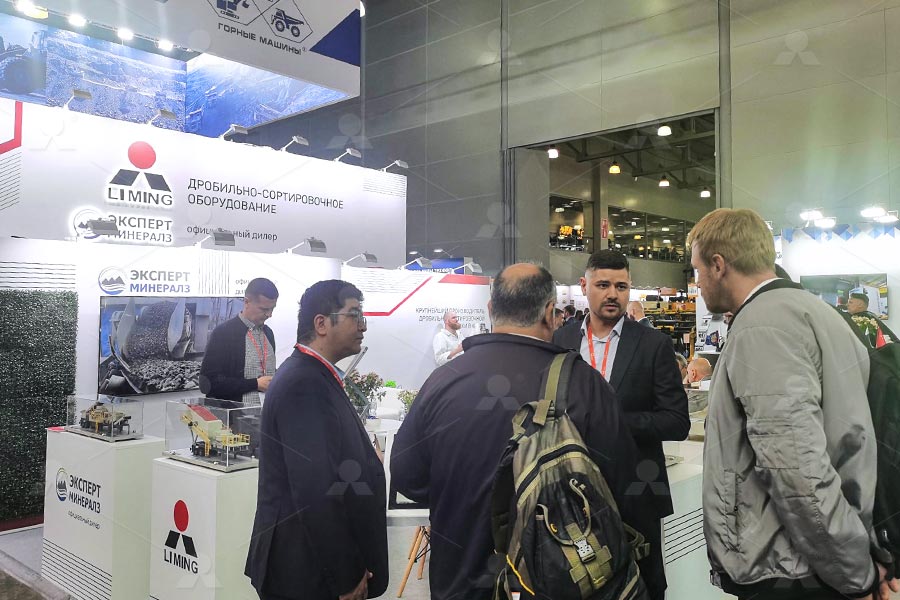
Liming Showcase Innovations at MiningWorld Russia 2024

MiningWorld Russia is an internationally recognized exhibition dedicated to the mining and extractive industries. As a business platform, the exhibition brings together equipment and technology manufacturers with buyers from Russian mining companies, mineral processors and wholesalers interested in purchasing the latest solutions for the mining industry.

 01.jpg

Liming will take part in the MiningWorld Russia 2024 exhibition with our newest stone crushers and mills. Welcome to our booth to find out more details!


Date: April 23-25, 2024

Booth No.: C1009

Venue: Crocus Expo IEC, Pavilion 1, Hall 3, Moscow


12/3/2024

12/3/2024

With New Investment, Iron Ore Processing Project Marks a Breakthrough

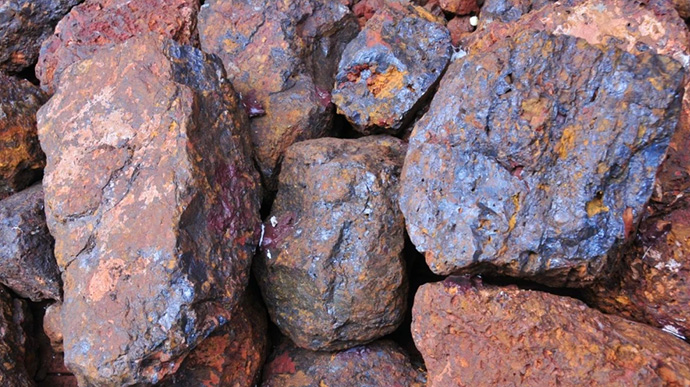
Recently, it has been reported that Guinea's Simandou iron ore project has successfully secured a $15 billion financing, sparking widespread attention in the global mining industry. As manufacturers of iron ore processing equipment, we are filled with confidence and see tremendous development opportunities in this.

The Simandou iron ore project has long been under the spotlight due to its abundant resource reserves and potential development value. The successful financing of this project will inject new momentum into the mining industry in Guinea and the entire region. As suppliers of processing equipment, we will actively participate, providing high-quality processing equipment and comprehensive technical support to the project.

1-230GG6092Y06.jpg

The arrival of this investment signifies a new round of development opportunities for the iron ore processing industry. We will increase research and development investment, continuously improve the intelligence and automation level of equipment to meet the project's demand for efficient production and energy conservation. Additionally, we will enhance cooperation with the project stakeholders, offering customized solutions to tailor the most suitable production line, maximizing the value of resources.

The vigorous development of the iron ore processing project will drive the prosperity of the entire industry chain. Besides equipment provision, we will also actively engage in technical training and after-sales services, assisting the project stakeholders in enhancing production efficiency, reducing operating costs, and achieving sustainable development.

As manufacturers of iron ore processing equipment, we will continue to keep pace with the project's development, innovate continuously, and provide customers with higher-quality products and services, jointly creating a bright future for the iron ore processing industry.

ore-b-2.jpg


29/3/2023

29/3/2023

Heap leaching gold extraction process

[Process introduction] : Gold heap leaching process is to break low-grade gold ore to a certain particle size (or granulation), pile it on a leakproof bottom mat made of asphalt, concrete or plastic materials, spray with low-concentration cyanide, alkaline solution, non-toxic solvent or dilute sulfuric acid and other solutions on the mine heap to dissolve gold, and the gold-containing solution percolates out from the mine heap. Then the gold is recovered by activated carbon adsorption or zinc powder replacement precipitation.

1-230GG60T4X9.jpg

[Application field] : Gold heap leaching is often used to develop small ore bodies or low-grade gold deposits, or both, and cannot be exploited by conventional methods.

ore-b-l.jpg


  • Home
  • Prev
  • ···1112131415···
  • Last
Clicky